Intelligence Systems

Systems for the decisions that run your company.

What needs attention today. Which accounts need action. What broke overnight. I design, build and run AI systems that notice what changed in your business, show the evidence, recommend what to do, leave the call to your people, and check whether it worked.

Illustration with fictional data. Meridale is an invented company, and this is not a client system. Each part shown is something one of my working systems does today; below, the parts that are proposed are marked.

Executive

What needs me today, and what can wait?

Revenue

Which accounts need action, and who owns it?

Operations

What broke overnight that nobody noticed?

Marketing

Is this worth publishing, and is it true?

Real systems. Reimagined interfaces.

The intelligence is working today. The screens below are redrawn.

Every example below is built on a system already running: revenue and operations intelligence delivered to clients, and the Executive Office and Marketing Department that run my own practice. The interfaces are presentation-grade redesigns with fictional data, not screenshots. Each one says what it is based on, and marks anything still proposed.

Every system starts with the same question behind the Clarity Gap: are we solving the right problem before we build the solution?

How a system works

From a business signal to a measured result.

Where it standsEvery step below runs in one of my working systems today. Built for a client, it runs on your data and accounts you control, around the decisions you name.

01 · NoticeSpot the condition

Watches your sources on a schedule. A quiet source that's healthy is reported as quiet; a broken one as broken.

02 · InterpretRead the evidence

Quotes what it found, where it found it, and states what it doesn't know.

03 · RecommendPropose an action

One recommendation, with an owner and a date to check it.

04 · DecideYour people approve

Nothing goes out, changes or closes until a person says yes.

05 · MeasureCheck what happened

Hits, misses and false alarms are scored. Results are credited only against a fair comparison.

Runs in one of my working systems todayProposed for client systemsFictional company, accounts and figures. Not a production screen.

Based on: a revenue intelligence system delivered to a B2B client, whose team receives its briefs. Client not named; scenario and data are fictional.
Operations decision

What broke overnight that nobody noticed?

Where it standsA concept view with fictional data. The checks it shows (a discount that stops applying, a flow that stops sending, ads running on a sold-out product) are the kind my working systems run today.

Every check shown runs in one of my working systems todayFictional brand and figures. Not a production screen.

Based on: an operations intelligence system running nightly checks for a consumer brand client. Client not named; brand and data are fictional.

Executive decision

Who owes me what, and how do I follow up?

Where it standsThe Executive Office runs my practice every day. It finds the commitments people made to me in mail and meetings, keeps the evidence, and drafts the follow-up. I read it, edit it and send it myself.

Every part shown runs in the Executive Office todayDrafted by the system. Sent by me. Recorded when it shows up in sent mail.

Based on: a system running in my own practice, in daily use. Interface redesigned; names and data are fictional.

Marketing decision

Is this worth publishing, and is it true?

Where it standsWriting a draft is the easy part. A director role judges whether it deserves to go out: the argument, the evidence, the voice. Reviewers run a fact check first. Nothing is scheduled until I approve it.

Runs in the Marketing Department todayProposedNo budgets, no campaign execution, no publishing without approval.

Based on: a system in production for my own marketing, still in acceptance testing. Interface redesigned; the company and post are fictional.

The working systems

The actual screens, as they run today.

Unaltered screens from my Executive Office and Marketing Department. Built for my own use, so they look like working tools, not the redesigned interfaces above.

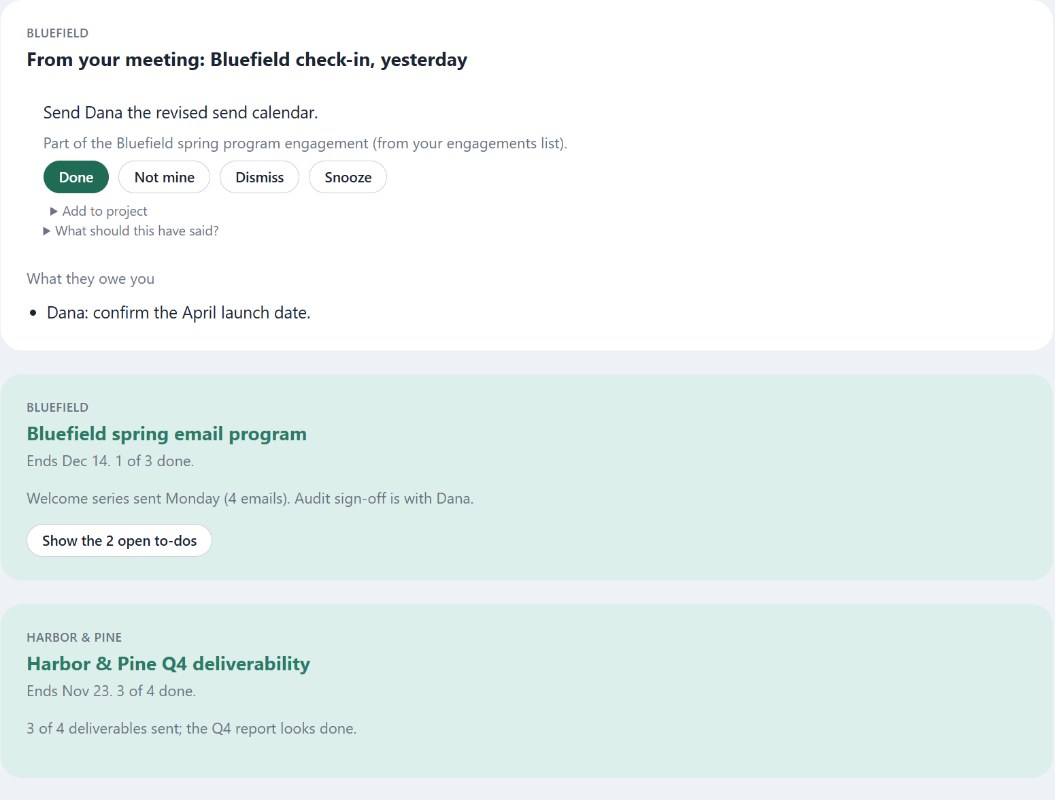
Executive Office desk items from a sample meeting and two sample client programs, each with its status
Executive Office. The desk in demo mode, with sample items. It closes nothing on its own: it shows the sentence and asks.
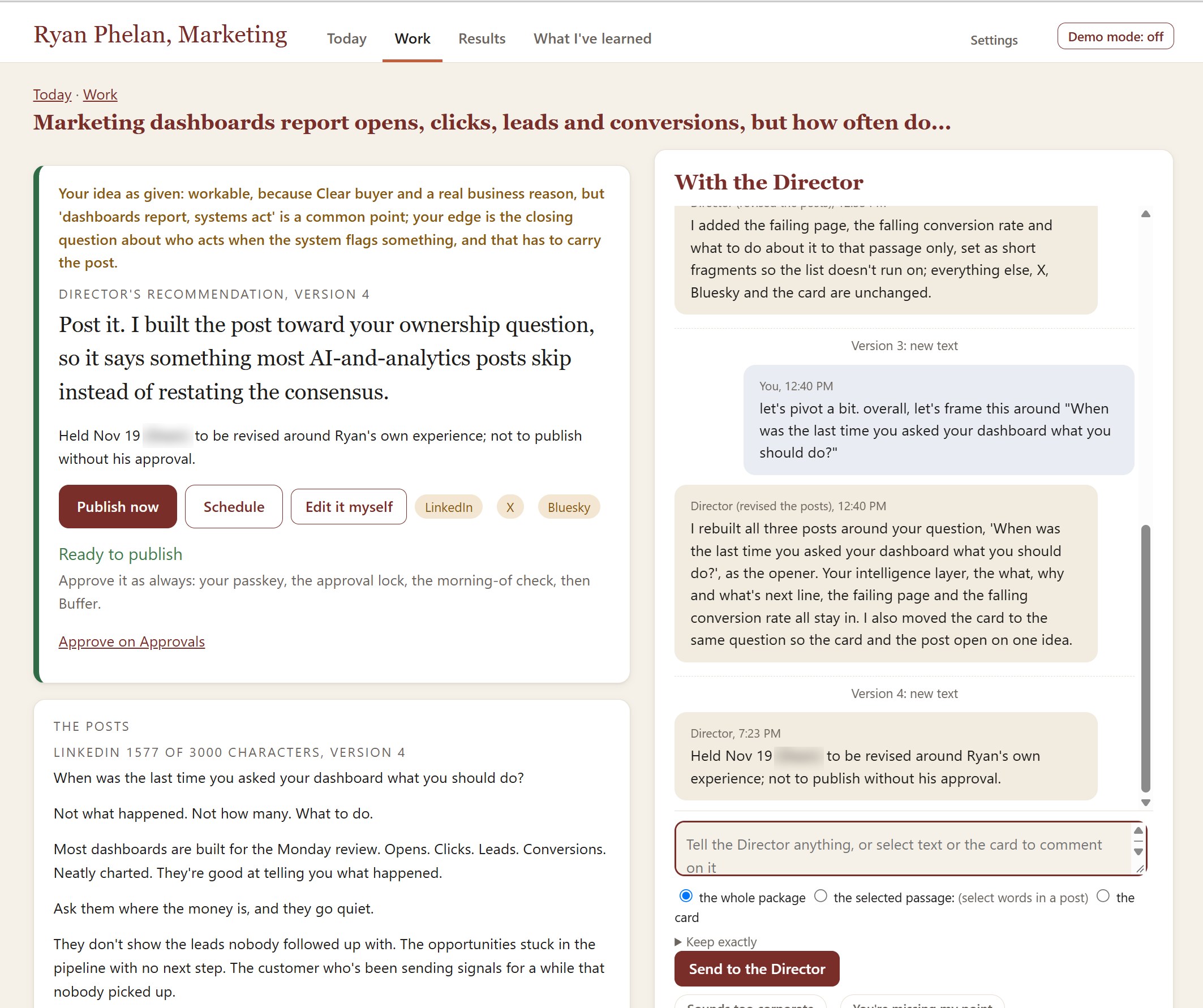
A real post in the Marketing Department workspace: the Director's grade of the idea, its recommendation for version 4, the conversation where the post was rebuilt around Ryan's question, and the approval controls
Marketing Department: from an idea to a post ready to publish. Real work, not demo data. The Director graded my idea, challenged the framing, rebuilt the post around my own question over four versions and recommended posting it. It still waits for my approval: passkey, approval lock and a morning-of check before anything goes out. One reviewer name is blurred.

The loop every system keeps

Signal→Evidence→Recommendation→Your approval→Result checked

Each system is built for your decisions and runs on accounts you control. I don't install a copy of mine.

Built and run by an operator, not sold by a vendor.

Nearly three decades building and running marketing, CRM and lifecycle systems at enterprise scale, as an operator and as a CEO. Now I build the systems I used to wish I had.